2024
08.05

As of August last year, Meta  (META)  — through Facebook and Instagram alone — boasted a roughly 65% share of all social media site visits in the U.S., according to data from Statista. Meta’s combined family of apps, which includes WhatsApp and Messenger in addition to Facebook and Instagram, boasted nearly four billion monthly active users as of December 2023.  Across its billions of users, the platform collects plenty of information, including data related to users’ activity on-platform, as well as app, browser and device information. 

Source ->

Comments Off on How Facebook used a VPN to spy on what you do on social media

2024
07.05

Informatiker der Colorado State University haben ihre Erkenntnisse in einem Paper zusammengefasst, das jetzt auf dem Distributed System Security Symposium vorgestellt wurde. Sie zeigten dabei, wie sich die elektronischen Fahrtenschreiber (ELD), die verpflichtend in den Fahrzeugen eingebaut sind, kontaktlos über Bluetooth und WLAN angreifen lassen.

Source ->

Comments Off on Wurm kann in kurzer Zeit Millionen LKW unter seine Kontrolle bringen
2024
06.05

Spezialisierte Motherboard-Hersteller in China bestücken Motherboards mit bis zu 20 Smartphone-Mainboard-Komponenten, setzen diese in Rack-Systeme ein und verkaufen das System zusammen mit einer Steuerungssoftware. Diese Kits sind Grundlage für Smartphone-Farmen.

Source ->

Comments Off on Cyberbetrug: Von Klick- zu Smartphone-Farmen
2024
05.05

Google has built special buttons that let you remove specific chunks of info – or remove it all at once. An official memo from the company details exactly how to do it. “When you use Google sites, apps, and services, some of your activity is saved in your Google Account,” Google explained. “You can find and delete this activity in My Activity, and you can stop saving most activity at any time.”

Source ->

Comments Off on Google reveals clever trick to erase what it knows about you – it takes just 10 seconds and wipes the lot
2024
03.05

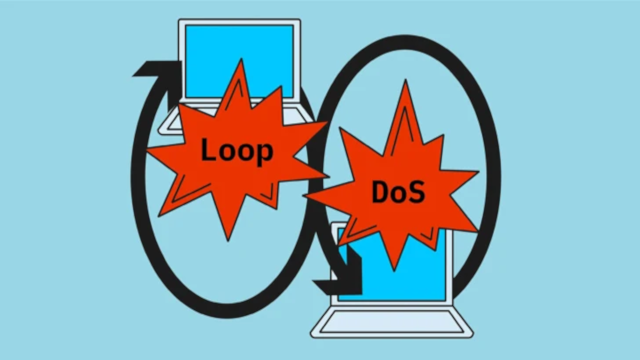
A novel denial-of-service (DoS) attack vector has been found to target application-layer protocols based on User Datagram Protocol (UDP), putting hundreds of thousands of hosts likely at risk. Called Loop DoS attacks, the approach pairs “servers of these protocols in such a way that they communicate with each other indefinitely,” researchers from the CISPA Helmholtz-Center for Information Security said.

Source ->

Comments Off on New ‘Loop DoS’ Attack Impacts Hundreds of Thousands of Systems